
Category

Blogs

Why Innovation Culture Matters in Today’s Chaotic World

Why We Need Innovation Culture in Today’s Chaotic World

By BlogsNo Comments

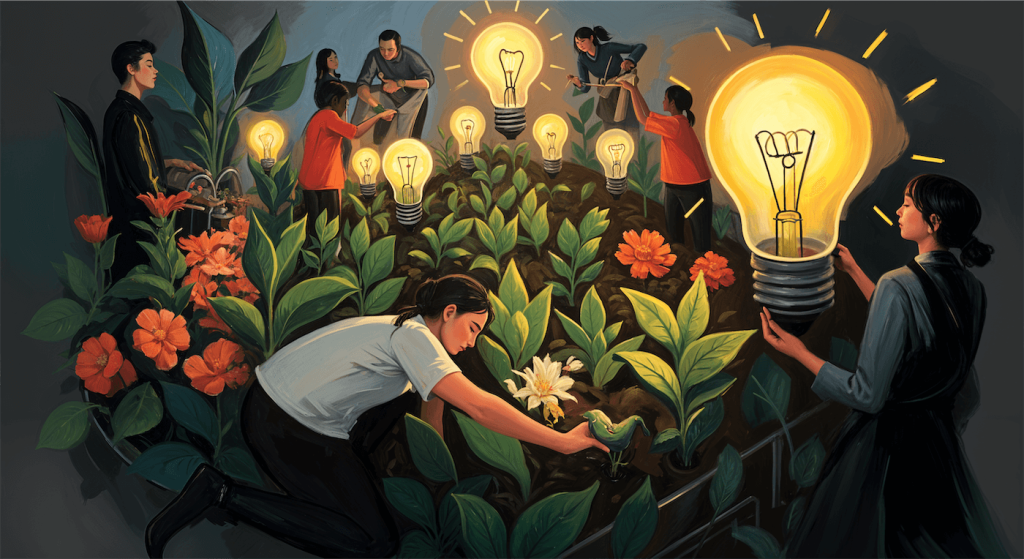
Let’s face it – we’re living in wild times. Industries flip overnight, tech evolves faster than we can download the latest update, and global curveballs keep coming at us from every direction. AI, automation, climate chaos, supply chain headaches – these aren’t some distant future problems anymore. They’re sitting in our inbox right now, demanding attention. In this environment, innovation isn’t just some cool buzzword for your LinkedIn profile. It’s how businesses survive when everything around them is changing. Companies that stick to “we’ve always done it this way” thinking? They’re dinosaurs watching the meteor approach. But organizations that build innovation into their DNA? They’re the mammals scurrying around, adapting, and ready to inherit whatever comes next. This is what the book Future Ready gets at – how AI and tech are reshaping work as we know it. About The Book The Clean Energy Blueprint But real innovation culture goes deeper than just buying new gadgets. It’s about people, mindsets, and values that determine how we respond when things get weird. So let’s talk about why innovation culture matters now more than ever – and how it helps us not just survive but actually thrive when everything’s up in the air.

Disruption Isn’t What It Used to Be


Remember when disruption came in nice, predictable waves? When businesses had years to prepare for the next big shift? Yeah, those days are gone. Today’s disruption is relentless:

  • AI tools evolve in weeks, not decades

  • A single app can flip an entire industry upside down overnight

  • Customers expect the impossible, then change their minds

  • Global crises (pandemics, anyone?) rewrite the rules while we’re still learning the old ones

This means the old playbook of careful planning and five-year strategies just doesn’t cut it anymore. Organizations need to be nimble. They need creativity flowing through every department. Most importantly, they need a culture where innovation isn’t some special event – it’s Tuesday.

What Does Innovation Culture Actually Look Like?


Innovation culture isn’t having a cool “Innovation Lab” with beanbag chairs that nobody uses. It’s not a quarterly brainstorming session where nothing happens afterward. Real innovation culture is a shared mindset that shows up in how people think and work every day:

  • People feel safe throwing out weird ideas without getting eye-rolls

  • Everyone’s genuinely curious and always learning something new

  • Experiments and failures are seen as valuable, not embarrassing

  • People collaborate across departments without territorial drama

  • The focus stays on solving problems, not protecting turf

  • Teams pivot quickly when circumstances change

When these elements come together, organizations don’t just react to disruption – they see it coming and sometimes even create it themselves.

How Innovation Culture Makes You Resilient


True resilience isn’t just bouncing back after getting knocked down. It’s being flexible enough that you don’t get knocked down in the first place. Innovation culture builds this kind of resilience.

You Can Turn on a Dime
Teams with innovation in their DNA can pivot quickly because they’re used to experimenting and adjusting. They’re not emotionally attached to “how we’ve always done things.”

Your People Step Up
In innovative cultures, employees don’t wait for permission to solve problems. They take initiative because they know it’s not just allowed – it’s expected. This ownership means faster solutions when things go sideways.

You Never Stop Learning
When technology evolves this fast, knowing stuff becomes less valuable than learning stuff. Innovative cultures prioritize constant learning, making their people future-proof.

Innovation Gives You the Edge
In today’s world, being efficient isn’t enough to stay ahead. Innovation is what separates the leaders from everyone else playing catch-up.

You Create What’s Next
Organizations that encourage creativity don’t just respond to market changes – they create them with new products and services that customers didn’t even know they needed yet.

You Make Customers Happier
Innovative cultures obsess over the customer experience. They’re constantly removing friction and solving problems from the user’s perspective, building loyalty that competitors can’t touch.

You See Around Corners
Instead of watching competitors and reacting, innovative organizations identify opportunities early – whether it’s adopting AI, creating new business models, or forming strategic partnerships that others haven’t thought of.

Innovation Culture Makes Risk Less Scary


The biggest innovation killer? Fear. Fear of looking stupid. Fear of wasting resources. Fear of failure. In most companies, people stay quiet rather than suggest something bold. Innovation culture flips this script. Failure becomes a learning opportunity, not a career-ender. This matters because:

  • Breakthroughs never come from playing it safe

  • Experimentation leads to discoveries you can’t plan for

  • Failures often teach you more than successes

  • Progress requires trying new approaches, even when they might flop

When people feel safe enough to challenge assumptions and suggest improvements, magic happens.

Leaders Make or Break Innovation Culture


You can have all the innovation programs and workshops you want, but if leadership doesn’t walk the talk, nothing changes. Leaders set the tone.

Great innovation leaders:

  • Get excited about curiosity, not just results

  • Foster collaboration instead of internal competition

  • Actually invest in learning (not just talk about it)

  • Cut through bureaucratic nonsense

  • Show adaptability themselves

  • Celebrate progress, not just perfection

  • Ask thoughtful questions instead of dictating answers

When leaders embrace change themselves, everyone else follows suit.

AI and Innovation: Perfect Partners
AI isn’t just another tool – it’s reshaping everything about how we work. Organizations with strong innovation cultures will harness AI’s power while others struggle with the transition. AI helps organizations:

  • Automate the boring stuff

  • Make sense of massive data

  • Spot trends before humans can

  • Support smarter decisions

  • Boost productivity dramatically

But here’s the thing: successfully adopting AI requires flexibility and openness to new ways of working – exactly what innovation cultures excel at. The companies that will thrive with AI aren’t necessarily the ones with the biggest tech budgets. They’re the ones whose people embrace change as an opportunity rather than a threat.

Building a Workforce That’s Ready for Anything
Tomorrow’s jobs will look nothing like today’s. Roles will evolve, new positions will emerge, and skill requirements will shift dramatically. Innovation culture prepares employees by developing:

  • Genuine curiosity about new tools and approaches

  • Adaptability when roles change

  • Problem-solving skills for navigating complexity

  • Collaboration across different disciplines

  • Digital fluency, especially with AI

These are exactly the skills that will matter most as work transforms.

Conclusion


The age of constant disruption demands more than traditional thinking. It requires organizations—and individuals—willing to explore, experiment, and evolve. Innovation culture is the foundation that gives people confidence in the face of uncertainty. It builds resilience during crises, keeps you competitive in fast-changing markets, and prepares you for whatever technological shifts come next. In a world where change is the only constant, innovation culture isn’t just nice to have—it’s how you survive and thrive.


How Energy Policy Shapes the Future of Clean Power

By BlogsNo Comments

The way we produce and use energy affects everything—from the cost of electricity to the health of our environment. But behind every power plant, solar farm, and wind turbine, there’s something just as important: energy policy. The rules, regulations, and decisions made by governments and industry leaders shape how fast (or how slowly) we move toward a cleaner energy future.

So, how exactly does energy policy influence clean power? Let’s break it down.

  1. Government Policies Can Speed Up or Slow Down Clean Energy Adoption

When governments set clear goals for clean energy, progress happens faster. Many countries and states have adopted renewable energy targets, requiring a certain percentage of electricity to come from sources like solar and wind. For example, the European Union has committed to 45% renewable energy by 2030, while California aims for 100% clean power by 2045.

On the other hand, weak or unclear policies can slow things down. If governments don’t provide incentives or remove barriers, fossil fuels remain the easier choice, delaying the transition to cleaner energy.

  1. Financial Incentives Make Clean Energy More Affordable

One of the biggest reasons renewable energy has grown so quickly is that many governments offer financial support to encourage its development. These include:

  • Tax credits and rebates: Homeowners and businesses can get money back when they install solar panels or energy-efficient systems.
  • Subsidies for renewable projects: Governments help fund solar and wind farms to make them competitive with fossil fuels.
  • Feed-in tariffs: This policy allows people who generate their own electricity (like with rooftop solar panels) to sell extra energy back to the grid at a guaranteed price.

When these incentives exist, people and businesses are more likely to invest in clean energy. But when they are removed or reduced, progress can slow down.

  1. Energy Regulations Decide Who Controls the Market

Not all energy policies directly focus on renewables. Some deal with who controls electricity production and distribution. In many countries, big utility companies have had control for decades, and policies are often written to benefit them.

For clean energy to grow, policies must ensure fair access for smaller, independent energy producers—like local solar farms or community wind projects. Otherwise, large companies can block competition, keeping fossil fuels as the dominant source of energy.

  1. Policies Can Support Energy Storage and Grid Modernization

Renewable energy works best when combined with stronger, smarter power grids and better storage systems. Governments can speed up this process by funding research, updating grid technology, and making it easier to build battery storage facilities. Without these policies, even clean energy sources might struggle to provide reliable power at all times.

  1. The Future of Energy Policy: A Global Push for Change

More countries are realizing that clean energy isn’t just good for the planet—it’s good for the economy. Renewable energy creates jobs, lowers electricity costs over time, and reduces dependence on imported fuels. That’s why we’re seeing an increase in global cooperation, with agreements like the Paris Climate Accord pushing for stronger climate and energy policies worldwide.

Final Thought: Policy Matters More Than We Think

Technology alone won’t create a clean energy future—policies and decisions must support the transition. Governments, businesses, and everyday people all have a role to play in shaping the policies that will decide the future of energy. When the right choices are made, clean power becomes not just possible but inevitable.

Can 100% Renewable Energy Work? Breaking Down the Myths and Realities

By BlogsNo Comments

The idea of a world powered entirely by renewable energy sounds exciting. Imagine a future where clean energy from the sun, wind, and water runs everything—from our homes to our businesses—without pollution or harmful emissions. But is this actually possible? Some people believe 100% renewable energy is a dream that can’t come true, while others argue that we already have the technology to make it happen. Let’s break down the biggest myths and realities about a fully renewable future.

Myth #1: Renewable Energy is Too Unreliable

Many people think that because the sun doesn’t always shine and the wind doesn’t always blow, renewable energy can’t provide a stable power supply. But the reality is that modern energy storage solutions, like large-scale batteries, can store extra power when conditions are good and release it when needed. Countries like Australia and Germany are already using battery storage to keep electricity flowing even when renewable sources temporarily slow down.

Myth #2: We Don’t Have Enough Renewable Energy to Power Everything

Some worry that renewable sources won’t produce enough energy to support growing cities, industries, and transportation. In reality, the earth receives far more solar energy than we could ever use. Advances in technology have also made solar panels and wind turbines more efficient, meaning they can generate more power using less space. In fact, some studies show that with the right investments, we could produce more than enough clean energy to meet global demand.

Myth #3: Switching to 100% Renewables Would Be Too Expensive

It’s true that transitioning to renewables requires investment, but the costs of solar and wind power have dropped dramatically in the past decade. In many places, renewable energy is now cheaper than fossil fuels like coal and gas. Plus, when we consider the hidden costs of pollution, climate disasters, and health problems caused by fossil fuels, clean energy actually saves money in the long run.

Reality #1: Some Countries Are Already Close to 100% Renewables

Several countries have made huge progress toward renewable energy. Iceland runs almost entirely on geothermal and hydropower. Costa Rica has achieved over 99% renewable electricity for years. Even in the U.S., states like California and Hawaii are aiming for 100% clean energy in the near future.

Reality #2: A Mix of Energy Sources is Key

No single energy source can do everything. The best approach is a combination of renewables—solar, wind, hydro, and geothermal—along with smart grids and energy storage to keep power stable. By using different types of clean energy and improving grid technology, we can build a system that’s both reliable and sustainable.

Reality #3: The Future is Closer Than We Think

The shift to renewable energy is already happening. More businesses, governments, and communities are investing in clean energy solutions. As technology improves, costs drop, and awareness grows, 100% renewable energy isn’t just possible—it’s becoming inevitable.

The question is not whether we can reach 100% renewables but how quickly we are willing to make it happen. The future of energy is clean, and it’s up to us to push it forward.

Lessons from Blackouts: What Past Disasters Teach Us About Energy Resilience

By BlogsNo Comments

Imagine being without power for days—or even weeks—after a storm. No lights, no heating or cooling, no way to charge your phone, and worst of all, no certainty about when things will return to normal. For millions of people around the world, this isn’t just a nightmare—it’s a reality when extreme weather or grid failures hit. Blackouts expose the weaknesses in our energy systems, and they teach us valuable lessons about what needs to change.

What Causes Blackouts?

Blackouts happen for many reasons, but some of the biggest ones are:

  • Extreme Weather: Hurricanes, winter storms, wildfires, and heatwaves put massive pressure on energy systems. High winds knock down power lines, wildfires damage infrastructure, and extreme cold or heat increases demand, pushing the grid to its limit.
  • Aging Infrastructure: Many power grids were built decades ago and were not designed for today’s energy needs. Old equipment breaks down more easily, leading to widespread outages.
  • Overloaded Systems: When too many people use power at the same time—especially during extreme heat or cold—grids can struggle to keep up.
  • Lack of Backup Solutions: Some places rely too much on a centralized power system without backup sources, making it harder to recover after a failure.

Lessons from Major Blackouts

  1. Hurricane Maria (Puerto Rico, 2017)
    When Hurricane Maria hit Puerto Rico, it destroyed almost the entire power grid, leaving millions without electricity for months. This disaster showed how fragile centralized grids can be. The lesson? More local energy solutions—like microgrids and solar power with battery storage—could help communities keep the lights on even when the main grid fails.
  2. Texas Winter Storm (2021)
    A deep freeze in Texas led to widespread power outages, leaving millions in the cold. The problem wasn’t just the storm—it was that the state’s grid wasn’t built to handle such extreme weather. The lesson? Energy systems need to be designed for the unexpected, with weatherproofing and diverse energy sources to keep power running in all conditions.
  3. California Wildfires and Power Shutoffs
    In California, power companies have shut off electricity to prevent wildfires, but this has left many people without power for long periods. The lesson? A smarter, decentralized grid—where communities have their own energy sources—could help prevent both wildfires and unnecessary blackouts.

Building a Resilient Energy Future

So, what can we do to prevent future blackouts?

  • Invest in Renewable Energy and Battery Storage: Solar and wind power, combined with batteries, can provide backup energy when the main grid goes down.
  • Strengthen Infrastructure: Upgrading power lines, making grids weather-resistant, and using smart technology can make energy systems more reliable.
  • Encourage Local Energy Production: Microgrids—small, self-sustaining power networks—allow communities to generate their own power, reducing reliance on a single grid.

Every blackout teaches us something. The question is, will we learn from them? By making smarter choices now, we can build an energy system that is stronger, cleaner, and ready for whatever the future brings.